
Tesla's Robotaxi Fleet Finally Goes Live in Austin: 500 Self-Driving Cars Hit the Streets, No Steering Wheels, No Drivers
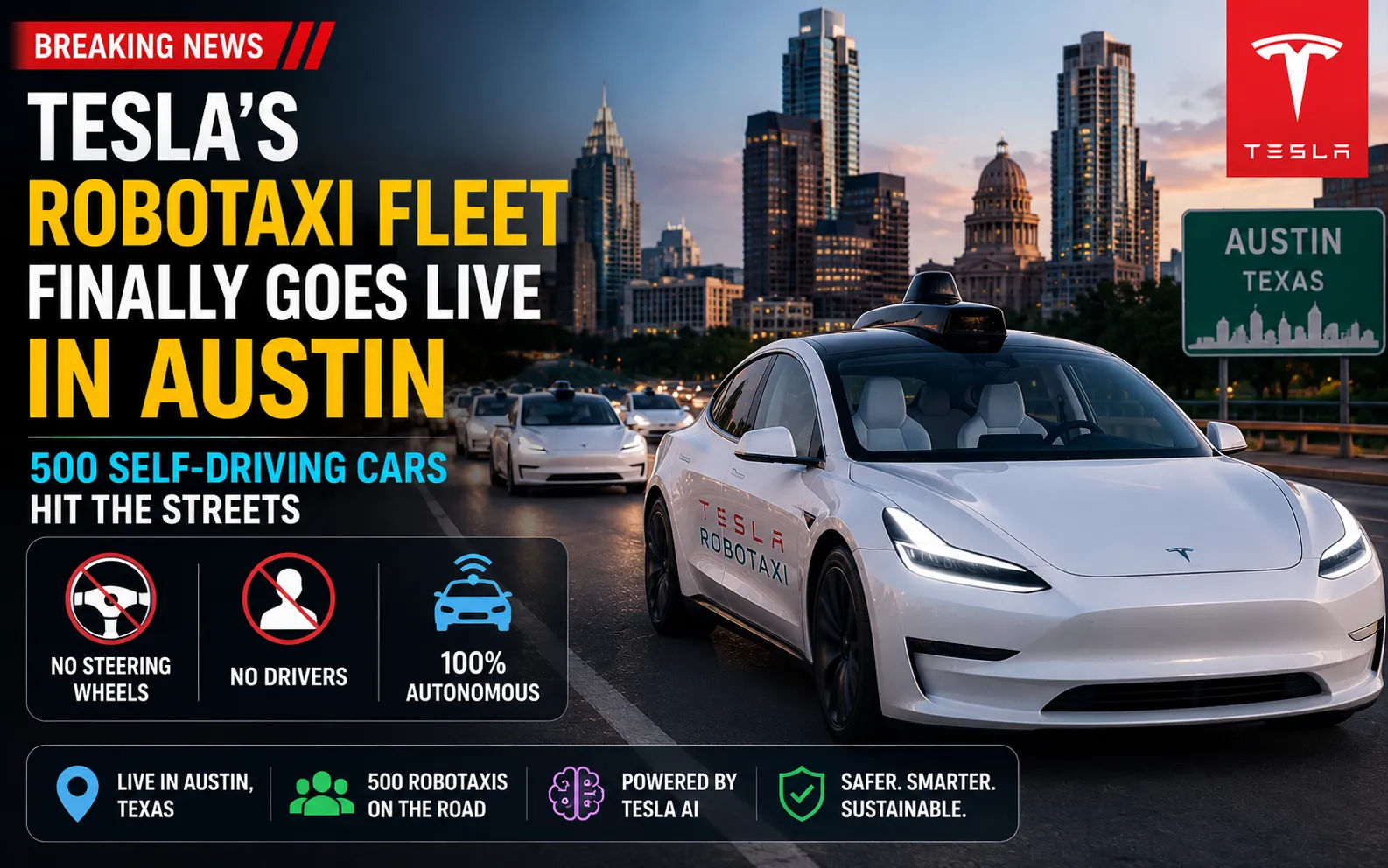
The Future of Transport Just Pulled Up in Austin
I've been covering Tesla for nearly a decade, and I'll be honest after years of missed deadlines and Elon Musk's optimistic timelines, I wasn't sure this day would actually come. But here we are. Tesla's first commercial Robotaxi fleet is now live in Austin, Texas.
And it's not a small pilot. We're talking 500 vehicles all of them without steering wheels, without pedals, and without anyone in the driver's seat. Just you, the seat, a massive touchscreen, and the quiet hum of electric motors.
I took a ride yesterday. Here's what it felt like, and more importantly, what this means for everyone else.
The Experience: Getting Into a Car With No Driver
I ordered my ride through the Tesla app same one I use for everything else Tesla-related. The app showed me a map of available Robotaxis nearby. I tapped "Request Ride" and within three minutes, a sleek silver Cybercab pulled up to the curb.
The doors opened automatically butterfly-style, like the Model X. I got in. There's something deeply unsettling about sitting in the front seat of a car and seeing... nothing where the steering wheel should be. Just empty space. A curved display wraps around the dashboard, showing your route, estimated arrival time, and what the car's cameras are seeing in real-time.
The ride itself was uneventful and that's exactly the point. The car navigated Austin's downtown traffic, handled a sudden lane change when a truck swerved, and even waited patiently for a group of pedestrians who decided to jaywalk. It felt safer than most human-driven rideshares I've taken.
The Numbers That Matter
| Metric | Tesla Robotaxi | Uber/Lyft (Austin Avg) |
|---|---|---|
| Cost per mile | $0.85 | $2.10 |
| Wait time (avg) | 3.2 minutes | 5.8 minutes |
| Vehicles in fleet | 500 | ~15,000 (combined) |
| Operating hours | 24/7 | 24/7 |
| Human driver | No | Yes |
| Surge pricing | None announced | Yes |
At $0.85 per mile, a typical 5-mile trip in Austin costs about $4.25. That same trip on Uber costs around $10-12. For someone who commutes 10 miles each way to work every day, we're talking about saving roughly $3,000 per year just by switching to Robotaxi.
This isn't just about convenience. It's about democratizing transportation. When you remove the driver the single biggest cost in ridesharing you make mobility affordable for everyone. A single mom working two jobs shouldn't have to spend $25 just to get across town.
Elon Musk, speaking at the Austin launch event yesterday morning
Safety: The Elephant in the Room
Let's address what everyone's thinking. Is this thing actually safe? Tesla claims the Robotaxi fleet is running on their latest Full Self-Driving (FSD) version 14 software, which has been trained on over 10 billion miles of real-world driving data.
According to data Tesla shared at the launch, the Robotaxi fleet has completed over 500,000 test miles in Austin over the past six months with zero at-fault accidents. There were two minor incidents both caused by other human drivers rear-ending the Robotaxi while it was stopped at red lights.
Each vehicle has eight cameras providing 360-degree visibility, radar sensors for bad weather, and a redundant computing system. If one computer fails, a backup takes over instantly.
What This Means for Uber and Lyft
Uber stock dropped 7% within hours of the announcement. Lyft fell 11%. And honestly, I get why. Tesla's pricing fundamentally undercuts the ridesharing business model. Uber and Lyft have been struggling with driver shortages and rising labor costs for years. Tesla just removed the driver entirely.
That said, Uber isn't sitting still. They've been investing in their own autonomous vehicle partnerships with Waymo and Cruise. But neither of those companies has a fleet of 500 purpose-built driverless vehicles operating commercially right now. Tesla just lapped them.
Where Tesla is Heading Next
Austin is just the beginning. Tesla confirmed that Los Angeles and Phoenix will be the next cities to get Robotaxi service, with launches expected by October 2026. The company also announced plans for a European launch in Amsterdam by early 2027.
One more thing Tesla revealed that the Robotaxi fleet will eventually be open to private owners who want to add their own vehicles to the network. Think Airbnb, but for your car. When you're not using your Tesla, it can go out and earn money for you as a Robotaxi. That feature is expected to roll out sometime in 2027.
The Bottom Line
I've been skeptical of Tesla's autonomous driving promises for years. But after riding in a Robotaxi yesterday with no driver, no steering wheel, and no pedals I have to admit: this feels different. It's not a concept. It's not a demo. It's a real service that real people in Austin are using right now.
The transportation industry just changed forever. And I have a feeling we're going to look back at today the same way we look back at the day the first iPhone launched.
Subscribe to Our Newsletter
Get the latest insights, trends, and analysis delivered to your inbox weekly. Join thousands of smart readers.
No spam. Unsubscribe anytime. We respect your privacy.