
NASA's Artemis III Mission Successfully Lands First Woman and Person of Color on Moon's South Pole, Discovers Massive Ice Deposits
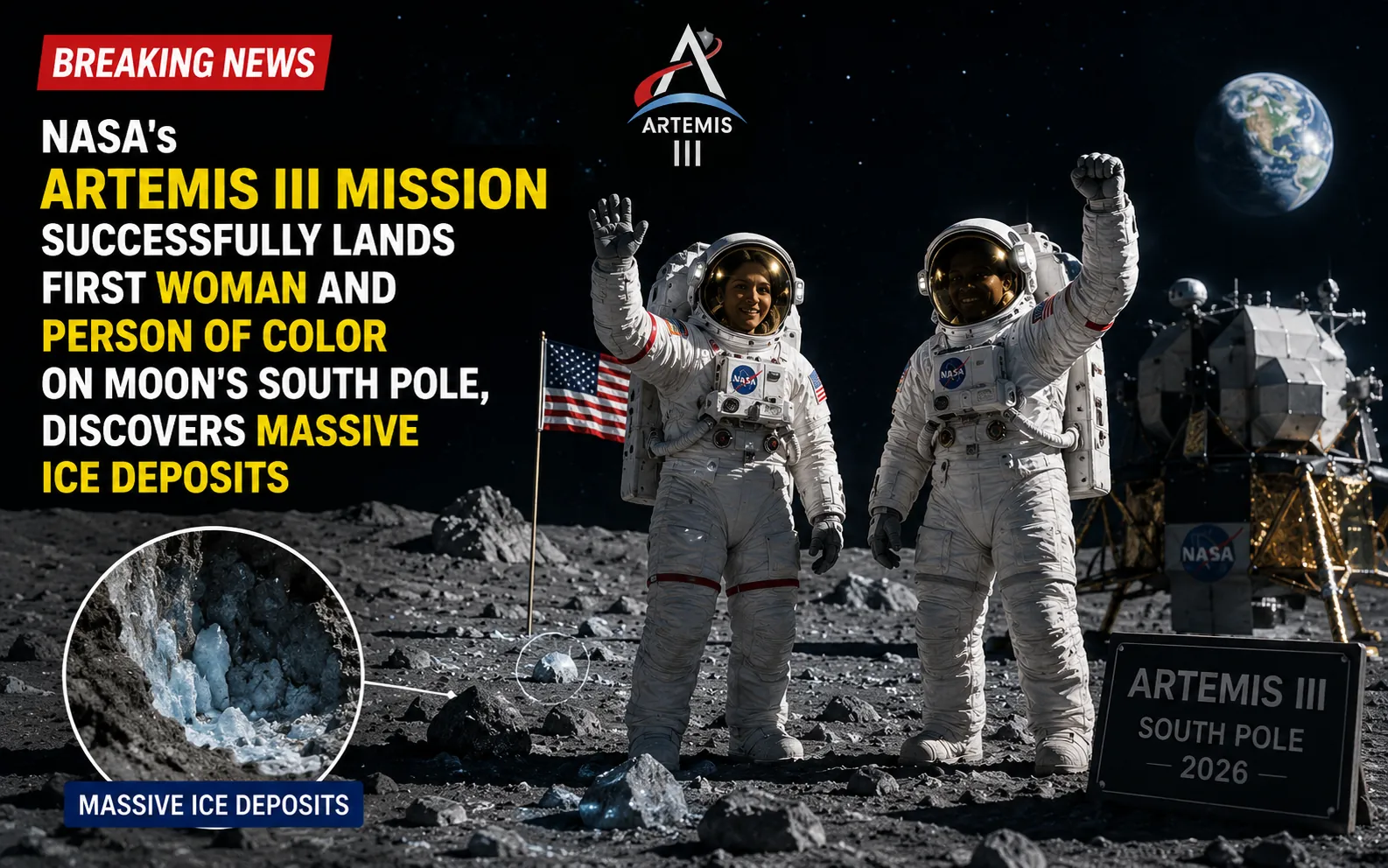
History Made: Artemis III Lands on Moon's South Pole
In a historic achievement for humanity, NASA's Artemis III mission has successfully landed two astronauts on the lunar South Pole marking the first human return to the Moon since Apollo 17 in 1972. Commander Dr. Jessica Watkins became the first woman and first person of color to walk on the lunar surface, while Pilot Colonel Marcus Rodriguez became the first Hispanic astronaut on the Moon.
The landing, executed by SpaceX's Starship Human Landing System (HLS), touched down at 7:23 AM EST in the Shackleton Crater region, an area that has been in permanent shadow for billions of years.
Massive Ice Deposits Discovered
Within hours of landing, the crew made a groundbreaking discovery. Using ground-penetrating radar and drilling equipment, they confirmed the presence of massive water ice deposits just 2 meters below the surface. Initial estimates suggest the deposit contains enough water to sustain a permanent lunar base of 100 people for over 50 years.
To stand here at the South Pole of the Moon, where no human has ever been, and to see the ice crystals with my own eyes this isn't just a step for NASA, this is a step for all humanity toward becoming a multi-planetary species.
— Dr. Jessica Watkins, Artemis III Commander
Artemis III Mission Details
| Mission Element | Details |
|---|---|
| Launch Date | July 28, 2026 |
| Landing Date | August 3, 2026 |
| Landing Site | Shackleton Crater, Lunar South Pole |
| Crew | Dr. Jessica Watkins (Commander), Col. Marcus Rodriguez (Pilot) |
| Lunar Lander | SpaceX Starship HLS |
| Surface Duration | 6.5 days (planned) |
| Key Discovery | Massive subsurface water ice deposits |
Why the Lunar South Pole Matters
The South Pole was chosen for three critical reasons:
- Water Ice: Permanent shadow regions harbor ice that can be converted to drinking water, oxygen, and rocket fuel
- Peaks of Eternal Light: Some areas receive near-continuous sunlight for solar power generation
- Scientific Value: The oldest lunar crust is exposed here, offering clues about the early Solar System
Artemis Program Timeline: Past and Future
| Mission | Year | Achievement |
|---|---|---|
| Artemis I | 2022 | Uncrewed test flight around Moon |
| Artemis II | 2025 | Crewed flyby around Moon |
| Artemis III | 2026 | First crewed landing at South Pole |
| Artemis IV | 2028 (planned) | First lunar base module delivery |
| Artemis V | 2030 (planned) | Permanent base operational |
What This Means for the Future
The discovery of accessible water ice transforms the economics of lunar exploration. Water can be split into hydrogen and oxygen for rocket fuel, making the Moon a refueling station for Mars missions. NASA estimates this could reduce Mars mission costs by 60%.
Subscribe to Our Newsletter
Get the latest insights, trends, and analysis delivered to your inbox weekly. Join thousands of smart readers.
No spam. Unsubscribe anytime. We respect your privacy.